The Song Remains

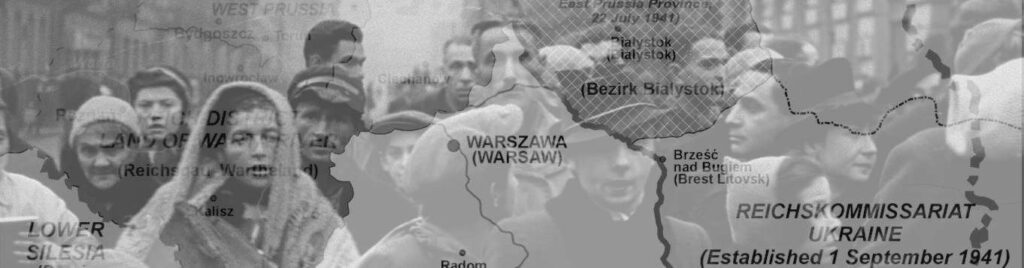
People of the Warsaw Ghetto merged with a map of the Nazi occupation of Poland

דאָס ליד איז געבליבן

Welcome to our collection of Yiddish poems with English translations from Nazi German occupied Poland. We’ll be publishing one new poem per week into 2027, so be sure to subscribe to get free weekly updates.

  • Simkha-Bunim Shayevitch (Simkhe-Bunim Shayevitsh)

    A.
    And lo and behold
    Spring has indeed arrived –
    Hey, sky – be joyful. Be joyful –
    you’re fresh, newborn,
    and lie in a blue golden cradle
    rocked by the gentle wind.
    The swallows sing you songs
    and you play with a grey bear-cloud
    that wandered onto your lap by chance.
    You wake up before dawn
    with a dreamy violet smile
    with the shimmer of a rainbow,
    and the evenings lull you to sleep
    with the loveliest fairytales
    by the colorful flickers
    of sunsets.

    B.
    And lo and behold
    Spring has indeed arrived again –
    the tree will send out another root
    deeper into the earth
    and the birds will build
    fresh cozy nests.
    But my ghetto-brothers
    must yet abandon their homes,
    those spun with golden dreams,
    and herdlike, by the dozens,
    by the hundreds – drag themselves
    day after day, night after night
    down into the transit camp
    to fulfill the expulsion mitzvah.
    Their steps, tired and sick,
    wobble, stagger like drunkards.
    But they are not drunk from wine
    and not from whiskey. But from woe and pain.
    From despair and bitterness.
    Their hands – half-numbed –
    barely move, like the wings of a sick bird.
    Their gazes – abyss-dark,
    like sheep led to the slaughter,
    and in their hearts beats the terror
    with the sound of clumps of earth thrown onto graves.

    C.
    And lo and behold
    Spring – praise be God – is here again.
    The night blows on the silver horn
    of the young moon
    and is learning a new song
    in honor of the Spring that this year
    arrived as a latecomer guest,
    but like a camel does a mother move,
    hunched from the weight on her back,
    with five little children straggling after –
    each smaller than the other,
    bundled in rags,
    wearing tattered shoes
    bound up by cords.
    With heavy “breadbaskets”
    like begging bags
    hanging in the front.
    They’re already spent and can’t walk any farther.
    The mother, like a hen,
    spreads her arms –
    she leaves the oldest on its own,
    the second, she curses,
    the third she pushes along,
    and with the fourth she prays,
    and only the fifth she takes in her arms,
    though remains standing herself, short of breath,
    like a spoiled fish
    with staring eyes
    and a gaping mouth,
    and the load at the rear and the child in front
    sway in the balance —
    the motherly balance —
    up and down
    back and forth,
    up and down
    back and forth.

    D.
    And lo and behold
    the miracle of resurrection occurs
    and Spring returns –
    but by us in the ghetto
    no one cares any more about the hunger
    that shrieks from every limb,
    and it has also been forgotten
    in the death that knocks so invitingly
    on dwellings, overlooking not a one.
    And like sad, trembling sheep,
    one shudders and flutters
    before the expulsion decree
    out to the unknown land,
    so, one shudders and flutters
    before the secret Balthazar script:
    — To Life or to Death –
    and when an old woman sees the hearse racing,
    her eyes glow with envy:
    — Yes – yes, that person had the good fortune..
    And the young man lowers his head:
    — Nah – nah. It’s all the same devil…
    And the young woman spits three times:
    — Tfu-tfu-tfu, let the Angel of Death be my groom.
    And even the child drags itself off to the trek
    with a pained tear-stained face, stammering:
    — Ma-ma-mine, oy, I have no maw strengt,
    Oy, put me up on the liddle black wagon…

    E.
    And lo and behold
    Spring – a welcome guest –
    is here once more.
    The buds drip with sap
    and young hearts with intoxicated blood.
    But in the ghetto somewhere in an attic room
    for ten days straight
    a seventeen-year old girl, lonely lay,
    with a little smile on her frozen lips,
    and with corroded lungs,
    and awaited the wagon
    that would come for her.
    Both her father and mother
    would be taken soon
    and within the hour
    she was due to be taken too.
    Before departing, her mother said,
    “Itkele darling, I’ll be waiting for you there…
    but in the meantime, have a lick of sugar,
    eat a tiny slice of bread,
    and when you go, wrap yourself well…”
    And her father grumbled,
    “—What can be wrong – along the way
    you’ll at least have a whiff of fresh air…”
    But her parents were sent off from the camp
    at the break of day.
    Her mother tore the hair from her head:
    — And where is my Itkele?
    Where, have mercy, have you left my child?…”
    And her father stood petrified
    with trembling lips and gaping eyes,
    and tore out a hair
    from his knotted beard.
    And at home, the seventeen-year-old
    waits and waits, waits and waits –
    a day goes by, a night comes;
    a dawn laughs unrestrainedly
    and a sunset murmurs in quiet piety:
    the first sentinel is deep in thought
    and the last – plays cat-and-mouse –
    the young moon peaks in through a crack
    and a cloud ensnares it in its pillowy paw,
    but they do not yet come for her.
    Her bread is long gone;
    the next day, a neighbor brings
    a cup of hot bitter coffee
    and a sniveling incantation:
    “They’re probably coming soon –
    the world is not helter-skelter.”
    A night goes by, a day comes.
    An evening is red, breaks into a drunken dance,
    and a sunrise moans with piercing grief –
    a bit of frost glazes the windowpane
    and a sun licks it up with its wee golden tongue.
    The sliver of sugar also done with,
    she lies with foam on her yellow lips.
    On the fourth day, a matron brings
    a cup of broth with a heavy sigh:
    — “Poor thing, such hunger to endure –
    they’ll come for you tonight for sure.”
    A day changes places with the night,
    a night with the day – two faithful guards,
    guarding her empty, wasted sick life.
    Her hands grope the top of the chair:
    perhaps there’s a morsel there
    to put in her mouth,
    and they quiver and quake.
    Her gazes wander in the void
    and her hearing is awake
    but rarely is there some cute little mouse
    to give her any cheer
    with a familiar live chirp.
    Just strangers’ steps running on the stairs,
    up and down, down and up
    avoiding her door, avoiding her door.
    The fifth day, she’s glazed.
    The sixth twilight, she sips a little soup.
    The seventh dawn – she dreams.
    The eighth – she is oblivious.
    The ninth – her head –
    a collapsed coil,
    falls back on the pillow,
    and her hands – two heavy stones.
    The tenth night – she’s dreaming once more –
    fellows are swimming, moving, running –
    they’re about to come for her,
    they’re about to knock on the door.
    Bubbles form on her clay-like lips
    and the greenish foam froths
    and the yellow smile glows:
    — “Daddy! Mommy! You tarried so long?!”
    Through the slit, the cloud
    spit out the moon:
    — A holiday today, huh? So bright, bright –
    Aha, my wedding night, my wedding n-i-g-h-t…
    But suddenly everything goes dark
    and her head flies, falls, sinks,
    rolls down into the abyss:
    — Daddy, Mommy,
    M-o-m-m-y, m-o-… — — —

    Translated by Miri Koral

    wor
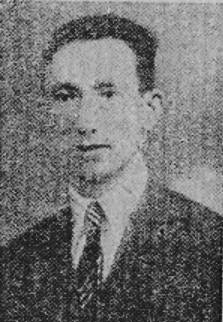
  • Simkha-Bunim Shayevitch (1907-1944) was born in Łęczyca (Lentshits) into a poor religious family that moved to Łódź. He was ordained as a rabbi, but never practiced. He learned to make gloves, and wrote prolifically. His father and mother died shortly after being confined in the Łódź Ghetto. His lost his wife and youngest child when they were arrested in 1942. Simkha was deported to Auschwitz in 1944, Kaufering Concentration Camp where he died of typhus shortly before the camp was liberated.

    Shayevitch began publishing his poems in 1933, and published poems and stories in a wide variety of publications. Much of his latter work was lost in the Łódź Ghetto, and never found.

    Sources:

  • Dovid Kenigsberg

    I listened closely to my soul,
    and heard, from afar, the song
    of men striding with purpose,
    their steps ringing on the hard earth.

    I dreamed: a sword at my side,
    and I kept vigil. Nearer rolled the sound
    through the late night. Then came to mind:
    Rise! Do your duty—pondering be done!

    I sprang up with fierce strength
    onto both legs, a soldier on watch
    in foreign lands before the war-tent.
    Awakened from the dream,
    I went to the window. The night was white.
    Not a tree stirred.
    The star of dreams shone over the world.

    Translated by Miri Koral

    (more…)
  • Dovid Kenigsberg (1891-1942?) was born in Busk, Galicia, and studied on Brody (Brod) and Czernowitz (Chernivtsi). He worked as a bookkeeper in Lwów (Lvov / Lviv / Lemberg). His first piece was printed in the collection Yungt in 1909, and he published his first poetry collection Lider, an 1912.

    He served in the Austrian army in the First World War, after which he published his most substantial collection of poems, Hundert Sonetn (One Hundred Sonnets) in 1921.

    Kenigsberg was in Lwów at the oubreak of the Second World War, and at that time was elected to the head of the Jewish division of the local author’s union. There are conflicting accounts of his death in 1942 – one account claims that he was murdered by the Soviets, and another that he died at the Yanove extermination camp aftger the liquidation of the Lwów ghetto.

    Sources:

  • Yakov Shudrikh

    Morning hangs on the windows, blue
    and fragrant with lilac and jasmine.
    My lips tremble and pay quiet tribute to
    everything that is young and green.

    My heart is still shadowed by grief
    for the light that is flickering out.
    And life, though arduous and brief,
    is also beautiful and grand.

    Sorrow is dying before my eyes,
    and I know how hard it is for it to die.
    But it shall not make me bow my head
    when fortune flowers here on Ukrainian soil.

    I’ve certainly not forgotten from whence I’ve come,
    and to where the party leads me, I know too.
    Hence am I as calm as are the blooms,
    and rejoice in the sunlight, as they do.

    Everything here must be built anew;
    let our singing resound from the work we do.
    And so splendid will be our raw earth’s fruit,
    that the next in line will offer us gratitude.

    I pondered all this when the new dawn
    swam in gentle, still, and soft.
    I imagined I was seeing two suns –
    one on earth and one above.

    Lviv, 1940

    Translated by Miri Koral

    (more…)
  • Alter Kacyzne (Alter-Sholem Katsizne)

    A little town full of life’s travail
    escorts the procession to the grave;
    and a world is roused by a mother’s lamentation:
    — My Feygele, where are you being taken?

    Dear Mama,
    beloved Mamenyu, don’t cry, don’t,
    you’ll not be left all alone, Mama,
    no, you won’t.
    I’m flying back to you as a birdie
    to sing of love and felicity.

    Through the gray of day and night’s dark,
    at the gravesite, a mother stayed stark:
    — My sweet Feygele, here my home will be;
    I’ll not leave you alone in the empty field.

    Dear Mama,
    beloved Mamenyu, don’t cry, don’t,
    you’ll not be left all alone, Mama,
    no, you won’t.
    I’m flying back to you as a birdie
    to sing of love and felicity.

    And early on the morrow, when the town awoke,
    a wondrous thing was there to behold –
    at the gravesite a cherry tree bloomed
    and on a branch a little bird sang this tune:

    Dear Mama,
    beloved mommy, don’t cry, don’t,
    you’ll not be left all alone, Mama,
    no, you won’t.
    I’m flying back to you as a birdie
    to sing of love and felicity.

    Translated by Miri Koral

    (more…)
  • Chaim Semiatitski (Khayim Semiatitsky)

    The yoke is upon you, city,
    forged to your stony shoulders,
    for you’re hitched to hundreds of cities,
    and a violent con, a flogger, holds the reins.

    The sky, like a heavy sheet of tin
    is hammered to your roofs;
    beneath such a sky, in the cellars and tiny attics
    mothers become whores, and fathers, cutthroats.

    In poor quarters at night, your courtyards
    lie like overturned heavy black boxes,
    bits of sky, star-studded, their bitter end.
    So stars twinkle like shards of glass in the trash,
    as opposed to the high-noon sun.

    And people move along your streets
    like countless shuttles of a gigantic loom,
    all with eyes looking downward;
    as no one wants to raise their eyes higher than their hat brim –
    all of them heading over here;
    there’s no going back there.

    ꞏ * ꞏ

    The shtetl is now full of evening.
    Women carry water mixed with sunset,
    and western-gold drips into muddy gutters;
    Jews go about sorrowfully, as if deep in mourning.

    I’ve almost forgotten
    the hour of sunset here in the city –
    since people demand: give us work, give us food,
    and the world is a rotten, filthy sheet of parchment.

    When I see golden bracelets, like red evenings,
    wrapped around thick fleshy wrists –
    I hear the wheeze of lungs
    within damp cellar walls.

    In the city I saw a different sort of sunset:
    here, earth is sky –
    and the red evening – the world bleeding.
    Raise your eyes to the east and behold – it’s growing light!

    Translated by Miri Koral

    (more…)
  • Chaim Semiatitski (Khayim Semiatitsky)

    1.

    On the downy snow-bed
    nights lie and serenely sleep,
    in stalls, cows doze,
    their eyes full of moon
    that slips into the stall
    through a thin slit,
    ruminating, ruminating,
    they ask, bellowing,
    what sort of world is this,
    what – Ha?
    Fish in the wavy, dark water
    rise quietly to the surface,
    swallow up a star
    and vanish back into the depths.

    2.

    Silence,
    wind is frozen to the earth.
    Fields stretch out – pure mirrors.
    Wherever you go, you step on bright star-studded sky,
    every naked tree is today a birch,
    stars pour from the sky
    and lie down forlorn on the faultless snow.

    3.

    Winter-nights are — silver flutes
    preceding multitudes, drunk with joy;
    tops of trees are strewn with snow like blooms,
    and on them stars grow.
    On rivers that kiss the banks with frozen lips,
    hares perch –
    on their thick puffy tails
    the moon is woven with beams.
    With frightened eyes, they seek a bit of open river for a drink
    and find none –
    so they hie over whiteness into woods, tethered to the moon.

    4.

    Pathways blossomed white
    and matched the fields,
    trees laugh bright, like children dressed in new shirts,
    stars shine, as if waking up from sleep,
    and rivers – world’s weeping eyes –
    lower icy eyelashes
    against the dazzle of snow.
    There likely was a fire late last night,
    so the world rushed out in only its clear nightshirt.

    5.

    Evening,
    on the back of a hillock
    the sun lay like a red poppy
    on a bundle of harvested rye,
    and mosquitoes danced around its face.
    Slowly, it slid down
    over grainfields into the velvet woods –
    and ears of corn silently lowered their heavy heads
    because a sparkling moon
    is already in the sky, like a sickle.

    6.

    Evenings are forlorn prayers
    waiting for someone – someone to listen.

    Trees appear to be stacks of evening,
    raked up from the fields.

    Horses slumber – necks on necks,
    heads full of green meadows dreams.

    At the tips of trees crows sleep,
    blanketed by bits of cloud.

    Grasses blindly nuzzle the earth
    like hungry nursing children
    at night seeking breasts.

    7.

    In the evening, like dark wine poured into bright transparent bottles,
    night dripped down from the tip of the church crucifix into the day
    and snuggled up so softly onto brooding straw roofs
    like a cat, a lone cat, that stretches out on earth with a moon at its head.

    Translated by Miri Koral

    (more…)
  • Chayim Semiatitski (Khayim Semiatitsky)

    At the tips of trees, days die,
    at the tips of trees, magnificent dawns arise –
    I am also a tree – and it will be the same for me.

    On rivers, clouds swim – dark ships of days,
    and white seagulls, tethered to sunrays –
    I am also a river – and it will be the same for me.

    Mists have wiped away the fields’ green and the sky’s blue;
    when a day brightens, the green weeps drops of dew –
    I am also a field – it will always be this way for me.

    If a child sees something bad in a dream,
    it cries out in the midst of sleep,
    if a child sees something good in a dream,
    it laughs aloud in the midst of sleep,
    I am also a child, and every day is a dream of mine,
    so it will be the same for me.

    Translated by Miri Koral

    (more…)
  • Ber Horovits

    Like a sick bird
    returned to its former nest,
    Mother, I arrived from the wide world
    for your simple sustenance.

    You wept and laughed
    out of sheer delight
    and over your child’s “good” fortune
    you sighed at night.

    And the next morning
    you circled my bed
    on tiptoes
    and smiled proudly,
    and gave my hair a stroke.

    On tiptoes, you smiled
    and kept talking freely
    to have me think you’re happy,
    to calm and comfort me
    to offer me surcease.

    Translated by Miri Koral

    (more…)