Welcome to our collection of English translations of some of the remaining works of important Polish Yiddish poets who were murdered during the Holocaust. We’ll be publishing one new poem per week into 2027.
Softly the clock sounds its mournful tick-tock, in the so still home with its ashen walls … The sadness is painful, the silence is laden, the hours drag slowly from one to the next…
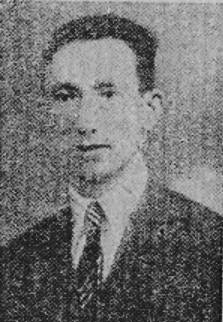
Simkhe Don (1904-1942) was likely born in Pułtusk, and published many poems in the period between the two world wars. Very little is known about his life, other than his published poems. He was murdered by the Nazis in either Warsaw or Majdenek.
His name in the original collection of The Song Remains – דאָס ליד איז געבליבן is incorrectly cited as “Simkhe Dan”.
My gaze races after the clock’s hands, my ear quivers at the pulse of time, and though this clamorous Warsaw has swept me far away, so very far — still, porter, your bright shadow I remain. My blood carries the clear echoes of your steps; wherever I am, I am your radiant chord!
A. And lo and behold Spring has indeed arrived – Hey, sky – be joyful. Be joyful – you’re fresh, newborn, and lie in a blue golden cradle rocked by the gentle wind. The swallows sing you songs and you play with a grey bear-cloud that wandered onto your lap by chance. You wake up before dawn with a dreamy violet smile with the shimmer of a rainbow, and the evenings lull you to sleep with the loveliest fairytales by the colorful flickers of sunsets.
Simkha-Bunim Shayevitch (1907-1944) was born in Łęczyca (Lentshits) into a poor religious family that moved to Łódź. He was ordained as a rabbi, but never practiced. He learned to make gloves, and wrote prolifically. His father and mother died shortly after being confined in the Łódź Ghetto. His lost his wife and youngest child when they were arrested in 1942. Simkha was deported to Auschwitz in 1944, Kaufering Concentration Camp where he died of typhus shortly before the camp was liberated.
Shayevitch began publishing his poems in 1933, and published poems and stories in a wide variety of publications. Much of his latter work was lost in the Łódź Ghetto, and never found.
Dovid Kenigsberg (1891-1942?) was born in Busk, Galicia, and studied on Brody (Brod) and Czernowitz (Chernivtsi). He worked as a bookkeeper in Lwów (Lvov / Lviv / Lemberg). His first piece was printed in the collection Yungt in 1909, and he published his first poetry collection Lider, an 1912.
He served in the Austrian army in the First World War, after which he published his most substantial collection of poems, Hundert Sonetn (One Hundred Sonnets) in 1921.
Kenigsberg was in Lwów at the oubreak of the Second World War, and at that time was elected to the head of the Jewish division of the local author’s union. There are conflicting accounts of his death in 1942 – one account claims that he was murdered by the Soviets, and another that he died at the Yanove extermination camp aftger the liquidation of the Lwów ghetto.
We use cookies to ensure that we give you the best experience on our website. If you continue to use this site we will assume that you are happy with it.